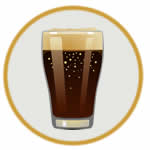
Glassware Guide for Beer
The correct glassware for your homebrew
We all know that different beers are usually served in different glasses. This is due to the fact that drinkers of alcoholic beverages have always had discerning tastes. All of these different takes on the drinking vessel have been developed and honed over hundreds of years to incite maximum enjoyment. From steins to goblets, pint glasses to mason jars, there is a vast array of beer glasses to choose from when you are serving homebrew.
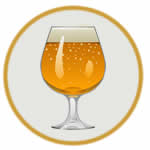
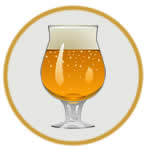
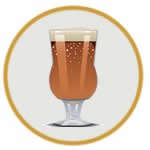
Snifter
About This Glass
| Capacity |
6–27 oz. |
| Benefits |
traps aroma with large surface area and narrow top |
| Beer Styles |
imperials, barleywines, belgians |
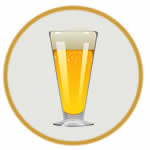
Pilsner
About This Glass
| Capacity |
12-22 oz. |
| Benefits |
slender glass reveals color and tapered top maintains beer head |
| Beer Styles |
lagers, pilsners, bocks, steam, wits |
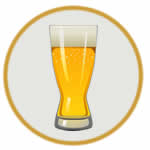
Wheat
About This Glass
| Capacity |
16-24 oz. |
| Benefits |
large headspace to hold the fluffy head associated with wheat styles |
| Beer Styles |
wheats, weizens, gose |
Stange
About This Glass
| Capacity |
6-12 oz. |
| Benefits |
amplifies malt and hop character |
| Beer Styles |
kölsch, rye, lambic |
Tulip
About This Glass
| Capacity |
12-16.5 oz. |
| Benefits |
captures head and enhances volatiles |
| Beer Styles |
imperials, belgians, bičre de garde, sours, saisons |
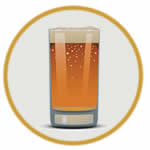
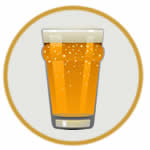
Nonic
About This Glass
| Capacity |
16-20 oz. |
| Benefits |
easy to store and holds large volume for crowning heads |
| Beer Styles |
ambers, porters, stouts, browns, pales, reds, strongs , ipas |
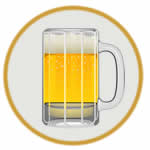
Mug
About This Glass
| Capacity |
12-24 oz. |
| Benefits |
heavy duty, great for clinking, holds large volume |
| Beer Styles |
blondes, browns, bocks, bitters, marzons, pilseners |
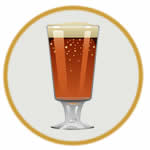
Pokal
About This Glass
| Capacity |
12 oz. |
| Benefits |
features color, clarity, carbonation and promotes head retention |
| Beer Styles |
lagers, pilsners, doppelbocks, helles, schwarzbiers, witbiers |
Thistle
About This Glass
| Capacity |
15--21 oz. |
| Benefits |
captures head and enhances volatiles |
| Beer Styles |
scotch ales, wee heavies, belgians, wilds and sours |
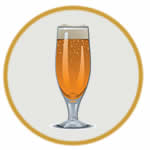
Flute
About This Glass
| Capacity |
4 - 14 oz. |
| Benefits |
enhances aroma quickly and showcases carbonation |
| Beer Styles |
dortmunders, eisbocks, lagers, lambics, wilds |
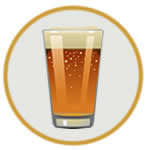
Pint
About This Glass
| Capacity |
12-20 oz. |
| Benefits |
easy to drink out of |
| Beer Styles |
reds, blacks, blondes, browns, wheats, ipas, porters, stouts, milds |
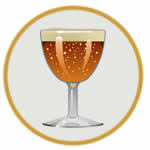
Chalice (Goblet)
About This Glass
| Capacity |
8-20 oz. |
| Benefits |
maintains head and showcases beer color and carbonation |
| Beer Styles |
belgians, weiss, dubbels, triples, quads |
Tulip Pint
About This Glass
| Capacity |
16-20 oz. |
| Benefits |
brandable, captures aroma |
| Beer Styles |
imperials, pales, ipa, lagers |
We can speak of beer glasses in some broad terms with sub categories. Most beer glasses fall into the following categories: mug, pint, goblet or flute.
Mugs follow the general straightforward shape of a circular tube and a handle always adorns this style of glassware. Steins fall into this category, although steins tend to have a slight inward slope leading to the top of the vessel, and usually sport a lid with a thumb lever to insulate and preserve the beer from unwanted intruders. When you think of a frosty glass of ale, you most likely are picturing either a glass mug or stein.
Another little known mug is the bierstiefel or trinkstiefel – a glass drinking boot. The glass boot shaped mug is not a common glass used by home beer drinkers, but is becoming more popular thanks to movies like Beerfest. Das Boot!.
Of course, mugs also come in a variety of materials – glass, wood, pewter, ceramic, plastic, stainless steel, enameled steel and textures come along with that – dimpled, smooth, coarse. A typical beer mug contains at least 16 ounces of beer, preferably 24, but for the serious beer drinker there is the german krug which contains a full liter of beer. Mugs are generally considered best for imbibing lagers, hefeweizens, brown ales, pale ales and imperial pale ales.
Not far from the mug lies the very familiar form of the 16 ounce pint glass. The pint glass is clearly the old stand-by when it comes to drinking beer, especially in bars and pubs. Pint glasses usually contain 16 ounces of beer, but you must beware of bars that serve pints in glasses with a heavier bottom. These pint glasses usually come out to 12 ounces or so, but it is fairly obvious that there is something amiss with the size of the pour.
Pint glasses contain many derivations such as the english pint or british pint which is made of slightly thinner glass and rounded to form a pleasing upper and lower bulge. This bulge allows for a nice thick head to form on the beer without over foaming, as well as adding a larger surface area for the aromatics to escape from when sipping or swigging. English pint glasses are best filled with stouts and other darker beers allowing for a nice rich, but medium thin head.
Pilsner glasses fall largely into the category of pint glasses, as well as weizens. Pilsner glasses are relatively simple, but a thinner more elongated version of the pint glass and often with long and elegant curves. The top is more narrow in order to channel sharp pilsner aromas into the nasal facilities, encouraging the pilsner's naturally bitter aromatic qualities with each sip.
Weizens have a similar shape. The curves are more pronounced with a thinner bottom and a more bulbous top section, whereas weizenbocks are straighter. Pilsner and hefeweizen are also sometimes served in glasses such as a stange (pretty much a straight mug without a handle) or a willi becher (like an English pint with less bulge).
Flute glasses resemble wine glasses and are usually more bulbous and have a stouter look if designed for beer drinking. Flutes always have a base with a stem (short in the realm of beer glasses) that approaches the vessel. Belgian ales are usually served from stout little flutes. Often referred to as snifters, these taller flutes are often used for lighter british ales such as Stella, and a strange variant known as the thistle combines the stem and bowl aspect of the snifter with the angle and rise of the pint glass. The thistle is usually reserved for scottish ales. Tulips are another variety of mid-sized flute, as well as pokal which combines the straight shot style of the stange with the base and stem of the flute.
Some common variations on the flute are the goblet and the chalice. The goblet is the glass that usually has a half bowl coming up from the stem with straight sides coming up at the median. Chalices are like snifters, but are more spherical in the bowl area which comes up from the stem. Barley wine is a common libation served in this style glass in 8, 10, or 12 ounce sizes. These glasses usually resemble a goblet, snifter or chalice.
Belgian ale glassware deserves special attention. Although most belgians are served in derivations of the flute, they all have their special cases: gusto, breugel, echanson, and triomphe. The gusto is a glass that has a tall stem and a bulbous bowl with a slight change of angle near the top. The echanson is similar, but with a more relaxed angle coming off the bowl. This is designed to keep the strong and complicated aromas of Belgian ales close to the nose. Breugel glasses are of a similar design with a tulip like shape that has a longer closing arc. Triomphe glasses are more reminiscent of a chalice, but made of glass.
I hope this article has been informative about the different designs of and uses for various types of beer glasses. Any glass can be used for tasting beer, but specific beer style glassware can expose hidden flavor and aroma in your beer.
 |
Christian Lavender is a home brewer in Austin, TX and founder of Kegerators.com and HomeBrewing.com. |
Related Articles:
Homebrew Bar Build - A bar for serving, displaying and sharing homebrew. Complete with step-by-step details.
Respecting the Ingredients - Storage and protection techniques for your grain, hops and yeast.
Putting Homebrew on Draft - A look at the choices for dispensing homebrew.
Published: October 29, 2012
For additional information on home brewing or homebrew topics please visit our home brewing article center.
|